 e032fc7774
* feat(whatsapp): allow converting inbox between WhatsApp providers Adds a Convert flow to switch a WhatsApp inbox between the four supported providers (default/360dialog, whatsapp_cloud, baileys, zapi) without losing conversations, agents, or history. - Channel::Whatsapp#convert_provider! runs inside a transaction: disconnects the old provider, clears provider_connection and message_templates, assigns the new provider/config, and triggers webhook setup plus template resync on the new service. - New POST /api/v1/accounts/:id/inboxes/:id/convert_provider endpoint guarded by InboxPolicy#convert_provider? (admin only). - UI adds a Convert button on the inbox Settings page with a type-to-confirm ConvertInboxModal that lists the effects before redirecting to a dedicated route reusing the WhatsApp provider wizard in convert mode (phone number locked, current provider hidden from the picker). * chore(whatsapp): polish convert UI colors and expand specs - Settings: use slate for the Convert trigger and ruby for the modal confirm to mirror the delete gate instead of the less conventional amber variant. - Drop the redundant "current provider is hidden from the list" sentence from the convert wizard description. - Add specs for the post-conversion webhook setup path (triggered and skipped branches) and the sync_templates error-rescue behaviour. * fix: address CodeRabbit review on convert-provider flow - Whitelist provider_config keys in the convert endpoint via permit rather than permit!, and default to an empty hash when omitted so the request no longer crashes. - Pre-validate the new provider config before disconnecting the old session so a bad target config no longer terminates the existing provider; also keep the disconnect bound to the old provider_url. - Guard ConvertInboxModal's submit handler so pressing Enter cannot bypass the type-to-confirm gate, and migrate it to <script setup>. - Reject invalid ?provider= query values in convert mode so hidden providers (Twilio, the current provider) cannot be reached via URL. - Await the inbox fetch in InboxConvert before running the route guard so directly opening the route for a non-WhatsApp inbox redirects. - Remove the unreachable second CloudWhatsapp branch in Whatsapp.vue. * fix: address second CodeRabbit round on convert-provider flow - Unify provider picker validation so create mode also rejects unknown ?provider= values, with a single helper that accepts available providers plus the whatsapp_manual fallback. - Simplify the pre-validation rollback in convert_provider!: the errors snapshot/merge dance was redundant because assign_attributes does not clear errors. - Follow the repo convention of asserting on error.class.name so the rollback spec stays stable under reloading/parallel environments. - Strengthen the controller success spec with provider_connection and message_templates cleanup invariants, and set Content-Type on the templates stub so HTTParty parses the empty data array correctly. * fix: address third CodeRabbit round on convert-provider flow - Add 360Dialog entry to the Whatsapp provider catalog, keep it hidden from the create picker (preserving the existing fork behavior) but expose it in the convert picker where it is a valid target. Restore URL reachability for ?provider=360dialog in create mode. - Scope the WHATSAPP_MANUAL allowance to create mode only: the manual fallback flow is not reachable in convert mode. - Redirect to the inboxes list in InboxConvert when the inbox is still absent after the store fetch, so the page no longer stays blank. - Use an explicit allowlist of WhatsApp providers to gate the Convert button instead of negating Twilio, so adding a new WhatsApp channel type will not silently expose the flow. - Bind the disabled provider display field with :value instead of v-model, since the underlying computed is getter-only. - Add Content-Type: application/json to the templates stub in the model spec so HTTParty parses the empty data array. * fix: address fourth CodeRabbit round on convert-provider flow - Reject no-op conversions that target the same provider as the one already configured, so the endpoint no longer wipes provider connection and message templates on a request that changes nothing. - Call the provider service's disconnect directly so failures abort the conversion instead of being silently swallowed; otherwise the old external session could remain live while the inbox flips to the new provider. - Cover both behaviors with specs. * fix: address fifth CodeRabbit round on convert-provider flow - Reset the Vuelidate state when closing ConvertInboxModal so reopening the gate does not surface stale validation errors. - Call teardown_webhooks before converting away from whatsapp_cloud so the Meta webhook subscription is removed for embedded_signup channels, mirroring the destroy-time cleanup (manual-setup channels keep the existing no-op behavior). Swallow teardown failures so a flaky Meta call does not abort the swap. - Switch the rollback specs to compare message_templates counts instead of the boolean be_present matcher so they remain meaningful if the fixture happens to have an empty templates list. * fix: address sixth CodeRabbit round on convert-provider flow - Derive the convert header's current-provider label from the shared PROVIDER_CATALOG so the picker and header stay in sync. - Assert the full Cloud provider_config payload and the absence of the Baileys-only provider_url key on both the controller success spec and the model atomic-swap spec. - In the sync-error spec, reload and assert that the record was actually flipped to the new provider before the sync rescue fires, so the test can't pass on a pre-save failure. * test: pin 422 error payload on convert_provider negative paths The unsupported-conversion and invalid-config specs only checked the status code, so they would have stayed green if the 422 started coming from a different branch. Pin the response body so each example actually covers the failure case it names. * fix(baileys): save custom host as provider_url, not url The Baileys form was writing the custom endpoint to provider_config['url'] while the backend reads provider_config['provider_url']. That silently broke the custom-host feature for newly created or converted Baileys inboxes: they always fell back to BAILEYS_PROVIDER_DEFAULT_URL. Align the key on both ends. * fix(whatsapp): skip second validation pass in convert_provider! The transaction's save! was re-running validate_provider_config after the old provider's session had already been disconnected, so a transient Graph API failure on the second check could roll back the swap while leaving the external session terminated — the exact inconsistency the pre-flight valid? was meant to rule out. Capture the validated provider_config snapshot after valid? (so fields populated by before_validation callbacks like webhook_verify_token are preserved) and switch the final persist to save!(validate: false) so the earlier check stays authoritative. * fix: normalize provider-conversion failures and pass accountId - The convert_provider action only rescued ActiveRecord::RecordInvalid, so disconnect/teardown failures bubbled up as 500 with no stable payload. Catch StandardError, log the class + message, and return a 422 with a generic user-facing message so the dashboard can surface the error consistently. - Nested settings routes live under /accounts/:accountId, so the router push from Settings.vue must include accountId alongside inboxId. Mirrors how sibling pages navigate to settings_inbox_show. * fix: report missing :provider as 400 and sync modal v-model - The generic rescue StandardError on convert_provider was masking ActionController::ParameterMissing behind a misleading provider-conversion error message. Catch it explicitly before the generic rescue and return 400 with the parameter-missing message. - ConvertInboxModal's closeModal now drives localShow to false so parents using v-model:show stay in sync on every close path, not only when the explicit onClose listener flips the flag. * fix(whatsapp): serialize concurrent convert_provider calls with_lock Without a per-record lock, two admin requests against the same inbox could both pass the pre-flight validation, race the disconnect/save, and then run setup_webhooks/sync_templates in arbitrary order, leaving the persisted provider out of sync with the external configuration. Wrap the whole convert flow in with_lock so the loser blocks until the winner commits; the subsequent no-op guard then rejects a second conversion request targeting the provider the first one just set. * test: harden convert_provider policy + controller failure specs - Pass accountId explicitly in InboxConvert redirects so the route navigation mirrors how Settings.vue reaches settings_inbox_convert. - Add a spec that assigns the agent to the inbox and still expects 401, so a future regression in InboxPolicy#convert_provider? can no longer slip past on the show policy alone. - Add a spec that stubs convert_provider! to raise StandardError and asserts the controller's generic-failure 422 payload, pinning the dashboard contract for provider-side failures. * test: pin convert_provider success response payload Parse the rendered body and assert provider + provider_config so the spec catches regressions where the DB is updated correctly but the serialized response drifts (dashboard store commits response.data). * fix(whatsapp): reset teardown guard after pre-conversion webhook cleanup teardown_webhooks memoizes @webhook_teardown_initiated = true to prevent double execution during destroy. Calling it from convert_provider! leaves that flag set, so a subsequent destroy! or follow-up conversion on the same instance would skip webhook removal silently. Reset the flag in an ensure block so the destroy-time guard stays scoped to destroy only. * fix: include accountId in post-conversion redirect params * test: pin same-provider convert returns 422 * fix(whatsapp): reset template columns when post-conversion sync fails * fix(convert): enforce provider allowlist in InboxConvert route guard * test: broaden Cloud templates stub to match account-scoped path * test(whatsapp): cover cloud to baileys conversion branch |
||
|---|---|---|
| __mocks__ | ||
| .circleci | ||
| .claude/skills | ||
| .dependabot | ||
| .devcontainer | ||
| .github | ||
| .husky | ||
| .qlty | ||
| .vscode | ||
| .windsurf/rules | ||
| app | ||
| bin | ||
| clevercloud | ||
| config | ||
| db | ||
| deployment | ||
| docker | ||
| e2e | ||
| enterprise | ||
| lib | ||
| log | ||
| public | ||
| rubocop | ||
| script | ||
| spec | ||
| swagger | ||
| theme | ||
| tmp | ||
| vendor | ||
| .all-contributorsrc | ||
| .annotaterb.yml | ||
| .browserslistrc | ||
| .bundler-audit.yml | ||
| .dockerignore | ||
| .editorconfig | ||
| .env.example | ||
| .eslintrc.js | ||
| .gitignore | ||
| .nvmrc | ||
| .prettierrc | ||
| .rspec | ||
| .rubocop.yml | ||
| .ruby-version | ||
| .scss-lint.yml | ||
| .slugignore | ||
| AGENTS.md | ||
| app.json | ||
| Capfile | ||
| CLAUDE.md | ||
| CODE_OF_CONDUCT.md | ||
| config.ru | ||
| CONTRIBUTING.md | ||
| crowdin.yml | ||
| CUSTOM_BRANDING.md | ||
| docker-compose.coolify.yaml | ||
| docker-compose.production.yaml | ||
| docker-compose.test.yaml | ||
| docker-compose.yaml | ||
| Gemfile | ||
| Gemfile.lock | ||
| histoire.config.ts | ||
| LICENSE | ||
| Makefile | ||
| package.json | ||
| pnpm-lock.yaml | ||
| postcss.config.js | ||
| Procfile | ||
| Procfile.dev | ||
| Procfile.test | ||
| Procfile.tunnel | ||
| Rakefile | ||
| README.md | ||
| SECURITY.md | ||
| semantic.yml | ||
| tailwind.config.js | ||
| VERSION_CW | ||
| VERSION_CWCTL | ||
| vite.config.ts | ||
| vitest.setup.js | ||
| workbox-config.js | ||
Chatwoot
The modern customer support platform, an open-source alternative to Intercom, Zendesk, Salesforce Service Cloud etc.











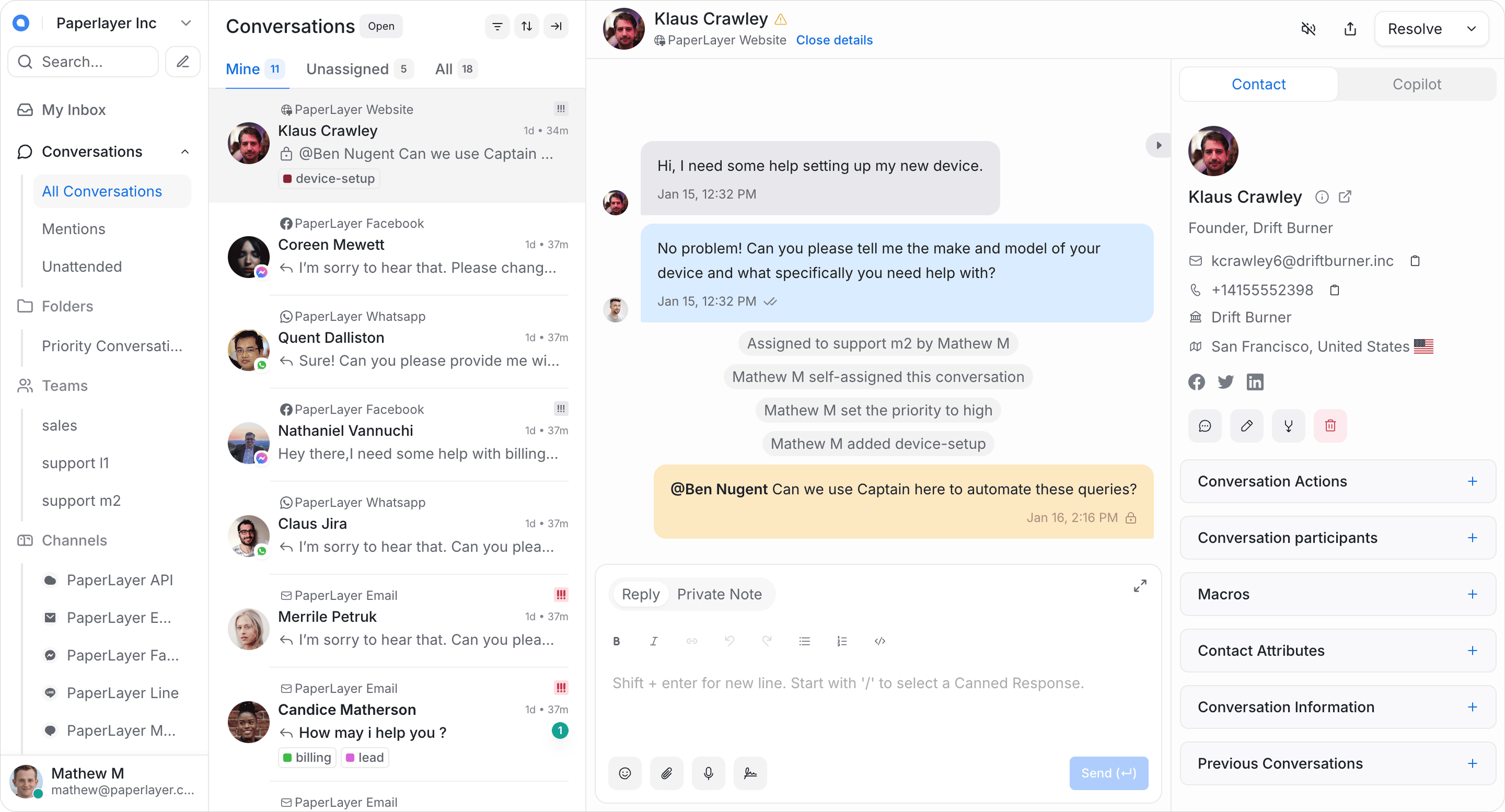
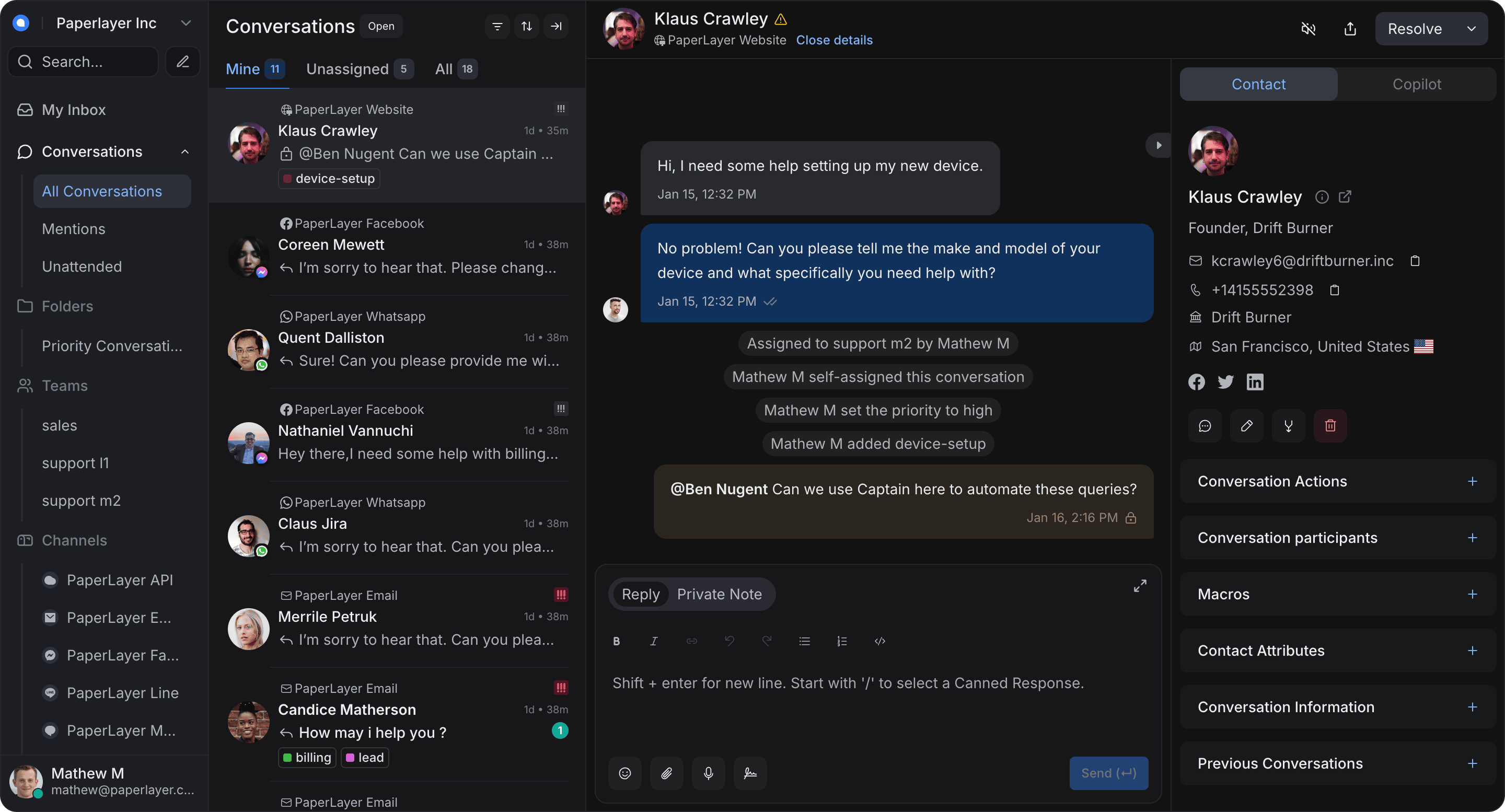
Chatwoot is the modern, open-source, and self-hosted customer support platform designed to help businesses deliver exceptional customer support experience. Built for scale and flexibility, Chatwoot gives you full control over your customer data while providing powerful tools to manage conversations across channels.
✨ Captain – AI Agent for Support
Supercharge your support with Captain, Chatwoot’s AI agent. Captain helps automate responses, handle common queries, and reduce agent workload—ensuring customers get instant, accurate answers. With Captain, your team can focus on complex conversations while routine questions are resolved automatically. Read more about Captain here.
💬 Omnichannel Support Desk
Chatwoot centralizes all customer conversations into one powerful inbox, no matter where your customers reach out from. It supports live chat on your website, email, Facebook, Instagram, Twitter, WhatsApp, Telegram, Line, SMS etc.
📚 Help center portal
Publish help articles, FAQs, and guides through the built-in Help Center Portal. Enable customers to find answers on their own, reduce repetitive queries, and keep your support team focused on more complex issues.
🗂️ Other features
Collaboration & Productivity
- Private Notes and @mentions for internal team discussions.
- Labels to organize and categorize conversations.
- Keyboard Shortcuts and a Command Bar for quick navigation.
- Canned Responses to reply faster to frequently asked questions.
- Auto-Assignment to route conversations based on agent availability.
- Multi-lingual Support to serve customers in multiple languages.
- Custom Views and Filters for better inbox organization.
- Business Hours and Auto-Responders to manage response expectations.
- Teams and Automation tools for scaling support workflows.
- Agent Capacity Management to balance workload across the team.
Customer Data & Segmentation
- Contact Management with profiles and interaction history.
- Contact Segments and Notes for targeted communication.
- Campaigns to proactively engage customers.
- Custom Attributes for storing additional customer data.
- Pre-Chat Forms to collect user information before starting conversations.
Integrations
- Slack Integration to manage conversations directly from Slack.
- Dialogflow Integration for chatbot automation.
- Dashboard Apps to embed internal tools within Chatwoot.
- Shopify Integration to view and manage customer orders right within Chatwoot.
- Use Google Translate to translate messages from your customers in realtime.
- Create and manage Linear tickets within Chatwoot.
Reports & Insights
- Live View of ongoing conversations for real-time monitoring.
- Conversation, Agent, Inbox, Label, and Team Reports for operational visibility.
- CSAT Reports to measure customer satisfaction.
- Downloadable Reports for offline analysis and reporting.
Documentation
Detailed documentation is available at chatwoot.com/help-center.
Translation process
The translation process for Chatwoot web and mobile app is managed at https://translate.chatwoot.com using Crowdin. Please read the translation guide for contributing to Chatwoot.
Branching model
We use the git-flow branching model. The base branch is develop.
If you are looking for a stable version, please use the master or tags labelled as v1.x.x.
Deployment
Heroku one-click deploy
Deploying Chatwoot to Heroku is a breeze. It's as simple as clicking this button:
Follow this link to understand setting the correct environment variables for the app to work with all the features. There might be breakages if you do not set the relevant environment variables.
DigitalOcean 1-Click Kubernetes deployment
Chatwoot now supports 1-Click deployment to DigitalOcean as a kubernetes app.
Other deployment options
For other supported options, checkout our deployment page.
Security
Looking to report a vulnerability? Please refer our SECURITY.md file.
Community
If you need help or just want to hang out, come, say hi on our Discord server.
Contributors
Thanks goes to all these wonderful people:
Chatwoot © 2017-2026, Chatwoot Inc - Released under the MIT License.